Saturday, 13 December 2014

Under the Skin: Curiosity and Living in a World Consumed by Chaos

by Christopher Barr │POSTED ON DECEMBER 13, 2014


“The eyes are the window to your soul.”
– William Shakespeare


Spoiler Alert!: This organic film is a true cinematic experience so please view the film, if you haven't already, before reading any further.


Under the Skin, a breathtaking film adaptation of the Michel Faber novel of the same name is a wonderfully mysterious erotic film about an alien that takes on the form of a beautiful young woman and hunts her prey on the damp streets of Glasgow, Scotland.  The visually unique and stunning film follows this indifferent being as she lures her unsuspecting lonely victims into an otherworldly liquid chamber for processing.  This subcutaneous alien, simply known as Laura, as a consequence of inhabiting a foreign body, and experiencing a life through human eyes, becomes a victim herself of something we all hold dear, our humanity.  She begins to feel and in some cases, to enjoy this human body, but that fraction of joy soon manifests itself into fear which leads to vulnerability and then exposure.


The oddly disturbing but equally fascinating film opens with her creation, her upload into human form.  In the most surrealist point in the film, we see circular rings in a void forming what soon becomes a spherical eyeball.  We hear screeches and reverberating pitches that begin to focus and tune into human speech.  This would be similar to tuning a guitar or a piano as the linguistic nuances of the English language come into fruition. 

A mysterious man on a motorcycle carries the limp body of a woman, placing her in the back of a cargo van.  Laura stands naked within this brightly lit void and removes the clothing from the girl, near death, staring at her.  This girl is an exact copy of Laura; she looks up at Laura as tears uncontrollably escape her eyes, resulting from her allowing human emotion to creep into her consciousness and consume her prime directive.  She was clearly an earlier version that like Laura will soon see, went out into the world to collect bodies for processing in their liquid chamber and subsequently became too attached to the fate of her prey, thus developing empathy.  When this timorous girl stares up at Laura in retrospect after seeing the film, says a lot not only of Laura’s inevitable doom but of her expendable worth to the overall project that they are there to execute.

Laura, ignorant of this girl’s emotional state, removes her clothing as if she was already dead, putting the clothing on herself and then examines an ant crawl along her finger.  This ant, possessing an intimidating appearance in itself but yet is weak and fragile, is a warning to Laura’s overall fate.  That ant and Laura’s instant curiosity of it has set in motion a series of events that, like the poor hapless alien near death on the floor, Laura is destined to become yet again another casualty of their project on earth, or where ever else they go for that matter in the universe.

A number of space ships take off from the rooftop of a skyscraper, cloaked within the clouds.  Then as Laura sets out on her mission she first must fit in, she must assimilate herself to the environment thus creating a sort of camouflage so she can blend in.  She soon discovers in a mall mankind’s superficial view of the female body with the make-up and fashionable clothing.  She gets herself a fur coat and while sitting in her newly acquired van, she applies red lipstick to her lips, preparing herself as bait to her predictably sexually hungry male prey. 


Laura sets out on the hunt, driving along the streets of Glasgow impassively studying the people going about their day for their calorific value.  She seeks out alone men and attempts to seduce them, asking them questions about themselves.  She smiles and makes them feel liked before inviting them back to an apartment building or house, the location of the chamber changes throughout the film.  Once inside, a possible other dimension, she walks ahead of them while she removes her clothing, erotically pulling them toward her with her gaze.  The male victim, in some sort of suggestive trance, removes his own clothing as he is understandably drawn to her.  

Here the film also explores the tunnel vision men often have when their focus is on beauty and sex, and nothing else, thus blinding them from the reality of the world.  The space they are in is black, it's some sort of alien chamber with a floor that gives way to a liquid substance similar to the color and consistency of oil.  The man slowly descends into the liquid, oblivious of the trap; he continues to draw himself toward Laura who smiles at him with a lascivious gaze.  We later see a man that she's lured into the chamber float in the liquid as we see her walk over the surface, unaffected by the liquid.  The man, naked with an erection, looks around and sees another naked man floating in the distance, that man soon is broken down into some sort of slug for processing.  All that remains of him is his skin, floating in the water dreamlike as his meaty parts float down a drain into a red light.


In arguably the most disturbing and terrifying scene of the film, Laura happens upon a man on a beach.  She asks him questions about whether he's alone or not.  It's clear that what these aliens are there doing is something they wish to remain under the radar. Laura’s alien handler, a man that rides a motorcycle, deals with any possible cleanup, eliminating any evidence that they were even there.  The man on the beach notices in the distance a woman swimming out to get her drowning dog that is stuck in the rough tides.  The woman gets caught in the undercurrent as presumably her husband runs in and tries to swim out to her.  The man talking to Laura runs along the beach and jumps in to save them.  He pulls the man out of the water as his wife and their dog drown.  While this is all going on there is an 18-month-old baby sitting on a blanket on the beach crying its little eyes out.  The husband runs back into the water and drowns as Laura picks up a rock and whacks it over the head of the man she just met down the beach.  She strenuously drags the unconscious man to her van as the baby cries out, likely wondering where his mother is.  Laura is completely indifferent toward the wellbeing of the baby.  The baby is not her target so to her, it's meaningless. 


Laura lures a number of more men, who have almost unintelligible Scottish accents, making them just as alien to us viewers as they are to her, into her web of sorts but as she does this, little pieces of empathy creep their way into her consciousness.  While out on the hunt, she receives a rose from a man whose hand is bleeding, a token of human generosity.  Blood from his hand is on the rose packaging and gets on Laura's hand.  Here she adds another piece of the human puzzle while on her journey of discovering what it is to be human and how fragile that can be.  Later Laura is standing in a dark room while her motorcyclist handler thoroughly and eerily examines her, staring deeply into her eyes, the gateway to the soul.  He does this likely to see if she is operating correctly, making sure she isn’t falling prey to human emotion like the previous version of her.  

While walking down the sidewalk she slips and falls on her face. Strangers are quick to come to her aid and lift her up off the ground. She is taken a little back by their act of compassion and kindness toward her.  Human beings will often help others when they fall, we want to help when a crisis occurs, this act drifts her even closer to human impulse.

While out driving along the streets of Glasgow, Laura picks up a young man with a facial condition called neurofibromatosis.  This is the most staggering scene in the film, it's a fearless look at how we judge people in society based on looks.  This strange scene makes the audience somewhat complicit in the sense that we notice the disfigurement even though Laura doesn't.  She sees him as no different than the other men she's lured into her van.  He, of course, is quite uncomfortable at first because her behavior toward him is unusual.  As he says early on, 'people are ignorant', he also states that he’s never been with a woman and has no friends.  He would firsthand know how horrible people can be to something that's odd or off in some way.  He would see himself as an alien on a planet with a species of beings that don't accept him for who he is solely based on how he looks.


Laura brings him back to the farming chamber for harvest processing, here the man is less hypnotized than the previous men, and his gaze isn’t solely on her.  They are both naked as the man is swallowed by the black plasma.  Laura dresses and walks out the door and then abruptly stops herself in front of a mirror.  Here she stares into her eyes and is likely analyzing these newfound emotions she is feeling.  It’s likely one emotion in particular troubling her is guilt.  She looks away from the mirror and toward a fly trapped between two panes of glass banging around senselessly. Empathy becomes layered on the guilt that's already there and she begins to feel pity for the deformed man.  As a result, she releases the man, still naked into the bushes. 

Her motorcyclist handler somehow knows what Laura is up to.  They must give off some sort of sound frequency that the handler is able to tune himself into.  This ability allows him to feel the progress of her mission as she executes it.  He sets out to track her down but not before he captures the disfigured man and throws him in the trunk of a car.

Laura as a result of this newfound growth has changed.  She climbs in her van and drives off but this time without wearing her fur coat, a symbolic garb that represented the hunter.  This is the first point in the film where Laura feels afraid and unsure about what to do now that the mission is over.  Laura drives for a bit but then stops in the thick fog and abandons her van, then walks in the fog aimlessly looking around.  Her crisis is in full swing here, she’s alone and without a purpose.  She walks into a small town and goes to a diner where she attempts to eat a chocolate cake only to spit it up on the table because she is not human.  She soon meets a man on a bus who is concerned for her as she listens but likely doesn’t understand the bus driver, under the camouflage of a thick Scottish accent, expressing his concern about her not having a jacket in this cold weather.  This courteous man on the bus takes pity on her and offers her to come back to his place for shelter for the night. 

While at this man’s house she continues to open her mind to new human possibilities.  She taps her fingers to music and watches a comedy show on TV as she fails at understanding happiness and joy.  Later up in her room she studies her naked body in the mirror, the curviness of her shape, the form of her breasts, and the muscle on her back.  She rubs her skin together between each foot, she gazes at how light forms around her body, and here she embraces her physical beauty.

Laura’s handler teams up with a number of other handlers, presumably for other female aliens luring hapless men into their chambers, and they all ride off on motorcycles to track Laura and bring her in.

Laura continues her road to discovery by trying to be human as she and the man that’s helped her take a hike and go to an old castle.  Later that night she attempts to make love to this man, opening herself up to the possibility of human love.  It becomes obvious that she really has no idea what she’s doing or what she’s capable of.  This is made painfully clear when the man attempts to insert himself inside her only to discover that there is no place to insert himself.  Laura rushes to the edge of the bed and points a lamp down toward her crotch only to discover that she has no vagina.

Laura flees the house in disbelief, realizing that she can’t be a human being and can’t be with a human being.  She enters a wooded area where she meets up with a logger who warns her to watch her step.  He asks her if she’s alone and what is she doing up there in the woods.  Laura, horrified, walks off and falls asleep in a hiker’s retreat only to be woken up by the logger’s hand massaging her crotch.  Laura runs off into the woods as the logger runs after her.  He catches up to her and attempts to rape her.  Here we see again mankind’s superficial view of beauty.  The seductive music that played while Laura lured her male victims into the farming chamber begins to play over the musical score, but this time it’s for the logger for he is the hunter and Laura is the prey.

Laura is able to escape the hold of the logger but not before he grabs at her back, tearing her flesh away, revealing a black silky alien under the skin.  Once he sees her true beauty under the skin of the superficial human skin, he is appalled.  The logger runs off as a discombobulated Laura begins to remove her skin revealing her true alien form.  She holds her human head on her lap as her avatar looks up at her, terrified.  The logger returns and pours gasoline on her then lighting her on fire.  Here the film conveys how we often in society only view beauty as a physical thing that can only exist on the outside of a person, and neglect the true beauty that exists on the inside, such as the plight of the deformed man.  The tragedy of the film is when most of us, not all, discover what a person is under their skin we are turned off somehow and just want to retreat.  There is a fear of depth when we get to know someone because the more we get to know them, the more we get to know ourselves and that’s the real fear here.  Because most people are unsure of who they are and cling to the norm for security, an exploration into the depth of another person can be a terrifying proposition.


Resulting from this man’s unbridled ignorance, his fear of himself and his misguided understanding of true beauty, the alien, as a consequence, runs out of the woods and falls and burns to death in a clearing as thick snow languidly falls from the sky.  The handler continues his search for her but can no longer detect her because of her emotional transformation, as the film ends with the alien corpse burning and the snow falling down.

Under the Skin is an extraordinary achievement and impeccably executed, its out-of-body strange tone was creepy and equally beautiful, its sound quality was immaculate in scope.  The narrative of the film was simple but simultaneously complex, luring the audience into its own web just as Laura lured her victims into the liquid chamber.  The film embraces otherworldliness; it remains open to interpretation as it should.  It truly is an alien both literally and metaphorically, it’s challenging in the best possible way a film should be without providing obvious answers to the questions that the film is exploring, which is similar to its Kubrickian influence of 2001: A Space Odyssey and the work of David Lynch, especially with Mulholland Drive and Blue Velvet, and certainly the judgmental fear found in The Elephant Man.  There is also an exploration of the Lovecraftian fear of the unknown and in some cases the forbidden.  Laura is the one that knows and then soon becomes the one that doesn’t know and as a consequence is killed by someone who is equally fearful of the unknown.


The film also explores the consequences of awakening in the form of Nietzsche’s Eternal Return.  The film starts with this scared Laura figure on the floor of a white chamber while the Laura of our story undresses her.  But yet at the end of the film when the alien is holding her avatar’s head in her lap, that Laura has the same sadness consuming her face.  The penalty here is; because she feels she becomes obsolete, then a new alien is uploaded with a human form only to go out into the world and inevitably have the same thing happen to them.  The tragedy here is enlightenment by default embraces openness and like the peaceful monks of Tibet, this can be a weakness in an often cold world, where so many have not only lost their way, they never had it in the first place.  The complexity of human emotion became a process that Laura was unable to understand.  She experienced love and compassion but also hatred and evil, this polarizing dichotomy became overwhelming for her.

Under The Skin is about loneliness, it's about solitude, it's about abandonment, but most importantly, in spite of its grim reality, it's about connectivity and compassion, it's about the desire to live life and share it as well, it's also about the cost of exposure in a world that is often filled with individuals that only wish is to exploit that exposure, that vulnerability.  


Wednesday, 3 December 2014

Andy Serkis and the Wacky World of Motion Capture

by Christopher Barr │POSTED ON DECEMBER 3, 2014


Andy Serkis is the most famous performance motion capture artist in the world.  He’s an actor and always has been one, certainly a decade before The Lord of the Rings: The Fellowship of the Ring.  Doug Jones is the world’s greatest performer in makeup (Hellboy, Pan's Labyrinth, Fantastic Four: Rise of the Silver Surfer, and performing as the lead 'Gentlemen' in the award winning episode 'Hush' from Buffy the Vampire Slayer), certainly the most known but Andy Serkis has even passed him as the most recognizable actor that you actually seldom see in his films.  What you do see is his performance, his eyes and movements translated and animated by various visual effects artists.


The world first heard about Andy Serkis as The Lord of the Rings films were released and praised during the early 2000’s.  He made a glimpse of an appearance in The Fellowship of the Ring but it wasn’t until The Two Towers that the true talent of this performer was made known to the world.  I would point out a scene around the middle of the film where Smeagol and Gollum simultaneously argued over who will be in charge of their split personality.  Frodo and Sam at this point where sleeping as this emaciated thing negotiates with itself above the murky swamp lands in the dark of night.  That performance was a revelation in its own right; it was Shakespearian acting at its best.

Gollum is a fully realized character that in the world of fantasy is real.  Andy Serkis provided the visual effects animators with so much realism that they were able to create a realistic creature that we as an audience could believe in.  Gollum is truly a tragic character, a thing consumed by the greed that reverberates off the Ring of Power.  He is Star Wars’ version of the darkside Yoda because he, through unmitigated weakness, allowed this force that the Ring gives off to consume his will.   He’s Frodo’s Jungian Shadow, that creeps along his shoulder and whispers ballets of deception to manipulate him into giving up the Ring.  Gollum is a scoundrel, he’s a weakness and what makes him this way is the amazing performance by Andy Serkis.  The Return of the King saw Gollum go to extremes to get his fingers onto the Ring by guiding Frodo into certain death to get the Ring and then fight on a cliff in Mordor only to fall into a pit of lava, chasing the Ring to its doom.

2005’s King Kong had Andy Serkis not only playing the main character but also a crew member of the ship sailing to Skull Island.  King Kong ended up being a tragic figure, a beast left behind in a sort of Dantesque purgatory.  He was a massive animal that become relatable to its audience.  He was sad and longed for connection, he longed for love, for love is the often defining reason for living in the first place.  Kong found love then lost it, then got it back and protected it to such an extent that he was willing to die to protect it, and he did die for it.  Andy Serkis created a passionate massive gorilla and made us fall in love with him.  Andy made us not only feel sorry for this hapless beast but he made us feel this animal’s pride, a pride that he has been long lost on his island.


In Rise of the Planet of the Apes Andy Serkis created a character in Caesar that we all again fell in love with.  By the end of Rise, as an audience member, we were invested in this ape far more than any human in the story.  This film bet everything on Andy Serkis’ performance and succeeded.  Andy went on to perform in Speilberg’s The Adventures of Tintin and then found himself back in Middle Earth to reprise his iconic role as Gollum in The Hobbit: An Unexpected Journey.  I might point out as this being the best scene in the movie.

In Dawn of the Planet of the Apes, Andy pushed Caesar to his limits as the conflicted ape deals with his Spinozism plight, where the philosopher states that, “All things excellent are as difficult as they are rare.”  The film deals with difference and who of this difference is entitled to reign supreme.  Caesar is a character tragedy trapped in between these differences.  Andy plays a main character that is passionate, that is fierce, that is a leader, that is a husband, that is a father, and that is a diplomat.


Coming up Andy Serkis is directing, for the first time, and performing in the Jungle Book.  He has multiple roles in Avengers: Age of Ultron, playing a human character and playing the motion capture advisor to the Hulk and playing Ultron.  He is playing a number of characters in Star Wars: The Force Awakens and what I’m looking forward to the most is he is directing and performing in George Orwell’s Animal Farm. 
Andy Serkis is an actor and one of the greatest working today.  Sadly his performances are recognized more by fans then by award ceremonies.  Hopefully this amazing talent will be seen by the very industry that he performs for as a great actor among great actors, which is a place that he deserves to be in.


Midnight in Paris and Living in the Past to Escape the Present

by Christopher Barr │POSTED ON DECEMBER 3, 2014

“What I hate is ignorance, smallness of imagination, the eye that sees no farther than its own lashes.  All things are possible.  Who you are is limited only by who you think you are.”
– Egyptian Book of the Dead

“We do not have to visit a madhouse to find disordered minds; our planet is the mental institution of the universe.”
– Goethe

Nostalgia is denial, denial of the painful present.
Midnight in Paris is an inspiring film, a film filled with joy and wonder during a time in the canon where there’s been very little of that.  The film pushes its main character into a confrontation with his own values of the world and his own views of himself.  Cognitive dissonance and the confirmation bias are two psychological phases that focus on our ability to deny reality in order to maintain our illusions.  This is where the individual adjusts their perspective on reality in order to achieve consonance.  Generally this individual will often avoid situations that challenge their beliefs in order to avoid dissonance and maintain the lie so to speak.  This film explores these concepts and presents them is a way rarely seen on film.  It’s never good business to explore the lies people tell themselves, usually film pulls people romantically into the lie to make them feel better about deceiving themselves. 


Gil Pender is a dreamer that fanaticizes about living in the past, specifically 1920’s Paris.  His fiancée, Inez and her Republican parents are in Paris with him.  Everyone around Gil is superficial and pretentious and he, a pacifist, lets them didactically walk all over him.  Gil wants to explore the fine city of Paris but his fiancée and her mother want to just blindly shop.  They don’t see the beauty in Paris that Gil sees. Gil’s fiancée and her parents are out of their element in Paris, they want the comforts of America and they find the culture in Paris more annoying than anything, because how unAmerican it truly is. 


Gil is treated like a child for the most part while with his fiancée, who orders him around and tells him to be quiet when her pompous friend Paul spews pedantic discernments about Rodin, Monet or his so-called insights on wine.  Gil is alone among the people in his life that are all drowning in self-interest and ego.  This plight of the alone person in a society filled with people is a sickness.  The fundamental problem with society suffering from its economical pandemic is it is unable to ‘see’ this problem due to the camouflage of competing for greatness, and aspiring to be a billionaire alone the way.  We are taught in society to be number one when in fact we should be taught how to collaborate with others.


Out walking by himself, inebriated, along the romantic back streets of Paris, Gil is invited into an old car filled with jovial Parisians for drinks and laughter.  Gil goes along but after meeting F. Scott and Zelda Fitzgerald and listening to the live piano playing of Cole Porter at a bar, he begins to realize, to his disbelief, that he is in fact in 1920’s Paris.  Understandably Gil is in shock but soon just goes with it and enjoys himself.

At a café he meets Ernest Hemingway, another one of his idols, and discusses his novel that he is writing.  Gil’s been reluctant to show his novel to anyone in his present, likely because he feels they won’t get it and thus they won’t get him, and quite frankly, most of them are idiots.  His desire to live in the past stems from him not being taken seriously in his present. This type of thinking comes from the fantasy of the mind; we begin to romanticize a sort of success for ourselves when no one in the real world cares.


Gil asks Hemingway to read his novel, leaves the café and is suddenly transported back to the present.  While back with his bossy fiancée, Gil thinks about the night before, likely working out the reality of such a fantastical happening.  Was it just a dream?  Here he rightfully is like a kid in a candy store.  What’s wonderful about this film is it never attempts to explore how this is happening.  There is no talk of wormholes or vortexes, he arrives at Midnight at the same side street and it just happens.


Back in the 1920’s, Gil meets a girlfriend of Pablo Picasso named Adriana and instantly and understandably falls for her.  After talking to her he discovers that she wishes she lived in 1890’s Paris.  She is a dreamer of good times long past, just like Gil, and wishes to live in the past and discard the present as prosaic.  Denial protects one from the anxiety of the present, Gil and Adriana are both suffering from Kierkegaardian fearfulness.  They fear the reality and finite nature of the present, they fear the disequilibrium of knowing that one day they will die and become irrelevant.
   

As the reality of his fantasy of living in 1920’s Paris expands, Gil runs into surrealist painter Salvador Dali and has a wonderful talk about love and Rhinoceros.  Visual artistic photographer Man Ray and Spanish filmmaker Luis Banuel joins the table as Gil tells them that he’s from the future travelling through time.

Gil also deals with his fear of death.  Here we explore the existential angle of the film but also how love and existence, and the everlasting aspect of it comes to fruition.  Gil reveals to the men at the table that he is in love with Adriana, presenting a complexity that even the complex men sitting with him have no access.  He’s in love with a woman in the 1920’s and is engaged to a woman in the year 2010.  Gil then tells Man Ray, Luis Banuel and Dali that he’s a time traveler.  He tells them he has a fiancée who doesn’t ‘look’ at him the way Adriana does.  The artists see Gil speaking in metaphor and not in reality so they see him as a man lost in time, lost in concept, they see him as a man through a surrealist’s lens, dripping in and out of a clock.


“Some people enter your life in a whirlwind and no matter how hard you try you can’t stop thinking about them, even after they leave…especially after they leave.” 
– F. Scott Fitzgerald to Gil about his wife Zelda


Gil goes back to the Rodin female tour guide in his present, standing by the infamous ‘Thinking Man’ and asks her about whether it’s possible to love two women at the same time, sort of like Rodin did.  Can you love them both in different ways?  Gil immediately realizes that she is far more open to the idea than he, an American, is.  Not that she is condoning it but she simply recognizes the complexity of it as a way of life.   She is right to think this; there is a complexity to it.  Love in not exclusive, love is complex and often one sided, meaning that one gives off love like an aerosolized fragrance, not toward something that is tactile.


“I believe that love that is true and real creates a respite from death.  All cowardice comes from not loving, or not loving well, which is the same thing.  And when the man who is brave and true looks death squarely in the face like some rhino hunters I know, or Belmonte, who’s truly brave.  It is because they love with sufficient passion to push death out of their minds, until it returns as it does to all men.  And then you must make really good love again.  Think about it.”
– Ernest Hemingway while sitting in the old car with Gil


Gil travels back to the Parisian street at midnight and climbs into the old car and is met by Tom Eliot, Thomas Stearns Eliot, otherwise known to the world as T.S. Eliot.  Gil is star-struck claiming that, ‘Prufrock is his mantra.’  This is pertaining to a poem written by T.S. Eliot called “The Love Song of J. Alfred Prufrock”, a poem structurally based heavily on the poetic writings of Dante Alighieri and is a social poem described as ‘a drama of literary anguish’.  Parts of the poem that Gil calls his mantra are the interior dramatic monologues of a city dweller, an urban man, conveyed by Eliot through the stream of consciousness technique.  The poem’s narrator is stricken with feelings of isolation and incapability for decisive action that is said, “to epitomize frustration and impotence of the modern individual” and “represent thwarted desires and modern disillusionment.”

Gil back in the 1920’s again goes to Gertrude Stein’s and asks her thoughts on the novel he is writing.  Pablo Picasso is there as well as listening in.  She tells Gil that, “we all fear death and question our place in the universe.  The artist’s job is not to succumb to despair but find an antidote for the emptiness of existence.”  The artist must create a coping mechanism of sorts to allow the reader to figure out for themselves, what it means to be alive for them, using these ‘antidotes’ to achieve this level of awareness.  The artist needs to sacrifice themselves for the goodwill of humanity.  The artist needs to kill themselves with their art so that many can learn from, or be shaken by the end result, thus knocking them out of the hypnotizing nature of conformity and banality.


Back in the present, Gil walks along the beautiful cobblestone streets of Paris.  He goes to an antique shop and talks to a young naturally beautiful woman about the great musical pianist Cole Porter, who wrote many stories about Paris and about how love is part of the essence of this wonderful city.   Gil buys a Cole Porter record and then strolls along the banks of the Seine River and buys a book from the many book havens along these river banks.  The book is written by his 1920’s love, Adriana.  He then gets a lovely Parisian woman to translate the French for him on a park bench.  Here, through the lovely voice of this woman, Gil finds out that Adriana loved him, she writes of a dream she has about receiving a gift from Gil.  She writes that Gil has bought her a pair of earrings and then they made passionate love.

Naturally being a man with blood pumping through his veins, Gil rushes home and puts together a present for Adrianna, sort of fulfilling his perceived manifest destiny.  Gil’s fiancée Inez, notices she has earrings missing, the ones that Gil just giftwrapped for his 1920’s love, she reports that they have been stolen by the housekeeping staff.  For a moment Inez questions what Gil is up to but then blows the whole thing off when Gil puts the earrings back and claims he found them. 


Gil goes back to 1920 and gives Gertrude Stein a revised draft of the first few chapters of his novel to read.  Henri Matisse is there selling some of his paintings to Gertrude at the same time Gil meets up with Adriana so they can discuss their feelings for each other.  They go for a walk on yet another majestic, beautiful, picturesque street in Paris, with street lamps illuminating and scintillating light flickering off the cobblestone brick street.  Sitting on a bench, Gil leans over and kisses Adriana because quite frankly, he has no choice.  Like Cole Porter sang, “You just do it, you just fall in love.”  Gil gives her the earrings, Adriana, loving them, puts them on as a stagecoach being pulled by two horses stops in front of them.  They are offered to join the coach for some company and entertainment.  Gil and Adriana are transported to 1890’s Paris and go and sit in a dining room hall, and then dance becoming mesmerized by their surroundings, Adriana especially.


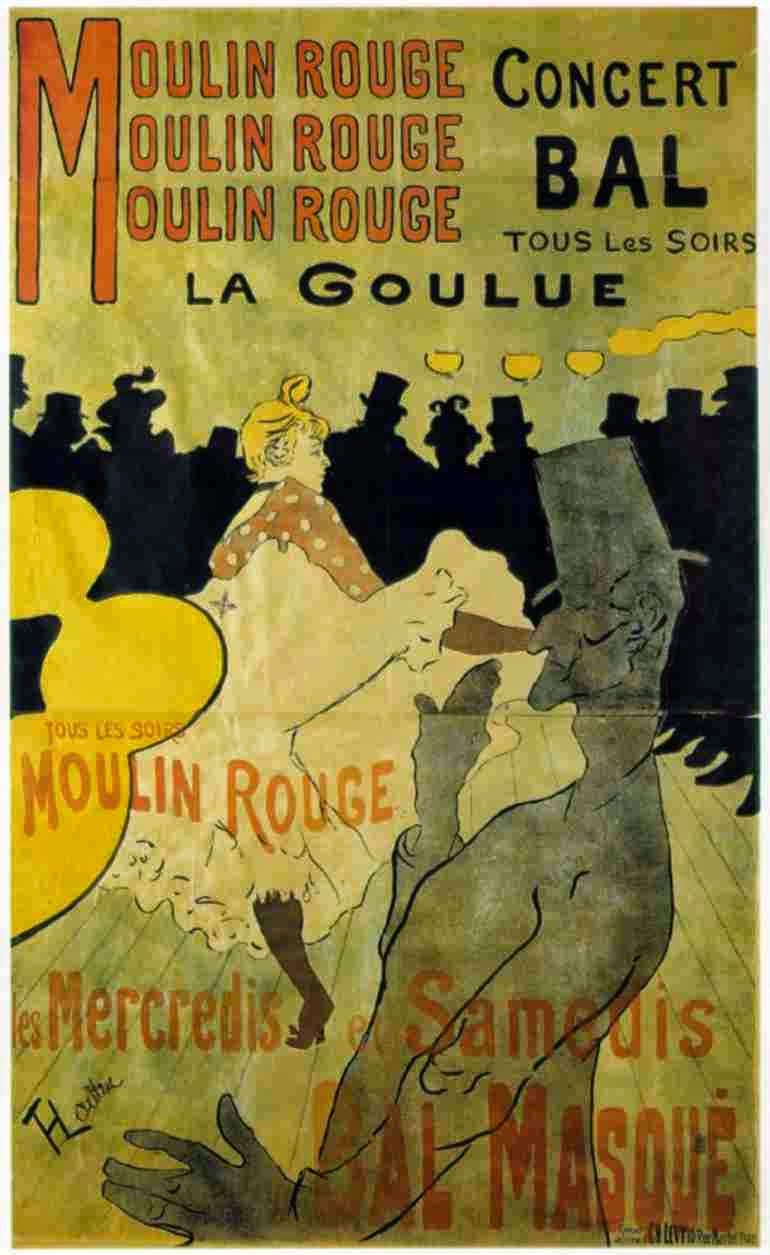
Gil and Adriana go and sit with none other than French painter Henri de Toulouse-Lautrec, while painters Edgar Degas and Paul Gauguin moments later join them.  Their discourse centers on the 1890’s generation and how it is empty with no imagination or with no surprises.  Adriana laments that the 1920’s is itself a generation with no imagination.  Here we are presented with our problem of the ‘present’ and that those that often occupy it are discouraged about its potentiality but have no problem praising a point in the past as being…perfect.   This scene, quite unique, displays how this particular concept, one that Woody Allen himself would have once purported, is flawed.  Gauguin thinks that the renaissance would have been a better place to have been born into, where Adriana thinks it’s the 1890’s and Gil thinks it was the 1920’s that was the best time.  Gil begins to realize that his present calamity is that it’s filled with unimaginable people and thus he, a creative man, is simply uninspired by his experience.


Adriana, still star struck, still mesmerized, takes Gil aside and states that they should never go back and should stay in the 1890’s, because she thinks the 1920’s are dull compared to where they are now.  Gil tells her that the 1920’s isn’t his present but 2010 is where he is from.  Here the realization appears that unfortunately is lost on so many in the real world; escaping to the past is an act of futility because no matter where you are, ‘you’ will always be there, meaning that problems are not always solved because of relocating oneself.


Adriana, sadly, admits that she wants the illusion thus freeing Gil of the unrealistic hold he had on his own illusion.  They say their good-byes, she’s staying and he’s going but for Gil, at this point, he wouldn’t want any other way.  Gil goes to the 1920’s to Gertrude Stein’s house to get his book, where she plants the seed that like Hemmingway, maybe his fiancée might be cheating on him.  When Gil goes back to the present he finds out that she was in fact cheating.  Inez naturally denies having an affair with pedantic Paul.  

Gil confronts his own level of cognitive dissonance as he explains to Inez that they shouldn’t be together and should in fact be a part.  Inez admits that she did cheat on him with Paul.  Gil decides to stay in Paris while his cheating ex-fiancée Inez and her Tea Party Republican parents go home.  Gil then meets with the girl from the antique shop and they walk together in the rain along a bridge, enjoying being in the present in this moment in time.


The past has always had a romantic aura about it.  The present we are responsible for, the future we can change but the past is written, its pages are full of stories with interesting people and places that are antiquated with big cars and cigarette smoke filled jazz clubs.  The past, not specifically our own, allows us to forget about our present and future, it allows us to enjoy what's great about humanity guilt free.  Essentially it allows us to be complacent and compliant with our station in life, it always us a way out of dealing with it, it keeps us inactive.  There is nothing wrong with nostalgia but it’s important not to get too swept up by its romance, losing yourself in it as the world outside your window passes you by.

“Maybe the present is a little unsatisfying because life is a little unsatisfying.”
– Gil

A great moment at the end is it ends happy.  Woody Allen realizes that once one sees the reality of their existence, this doesn’t mean death.  He wants his audience to know that happiness can be found on the other side of illusion.  Midnight in Paris does want us to get over ourselves as most Woody Allen films do, but here it’s a philosopher’s journey about realizing the past without letting it define your present. 


“Nostalgia is denial – denial of the painful present… the name for this denial is ‘golden age thinking’, the erroneous notion that a different time period is better than the one ones living in – it’s a flaw in the romantic imagination of those people who find it difficult to cope with the present.”
– From Midnight in Paris

 “Peace can only come as a natural consequence of universal enlightenment.”

  - Nikola Tesla